
Calculate the True Cost of Wrong-Fit Jobs
The Buildscout Wrong-Fit Job Cost Calculator helps contractors quickly see how much time and money is being wasted on wrong-fit jobs. By entering your average quoting hours, hourly rate, travel costs, and the number of unsuitable jobs you quote each month, the calculator reveals the true cost of wasted quotes. It also shows the missed profit from good-fit jobs you could be winning instead. Whether you're a builder, electrician, plumber, or tradesperson anywhere in the UK, this tool highlights the impact of chasing poor-quality construction leads and why focusing on local right-fit jobs is crucial for profitability.
Why Wrong-Fit Jobs Hurt Your Business
Spending hours on the wrong opportunities means less time for profitable work. The calculator highlights how quickly these wasted quotes add up, not just in direct costs but also in missed earnings from better-fit jobs you could have won. Use it to get a clear picture of how wrong-fit jobs affect your bottom line — and to start thinking about how focusing on the right opportunities can protect your time, money, and long-term growth.
How Much Time Wrong-Fit Jobs Really Cost
Our research suggests UK contractors can lose up to four months of working time every year on jobs that were never the right fit.
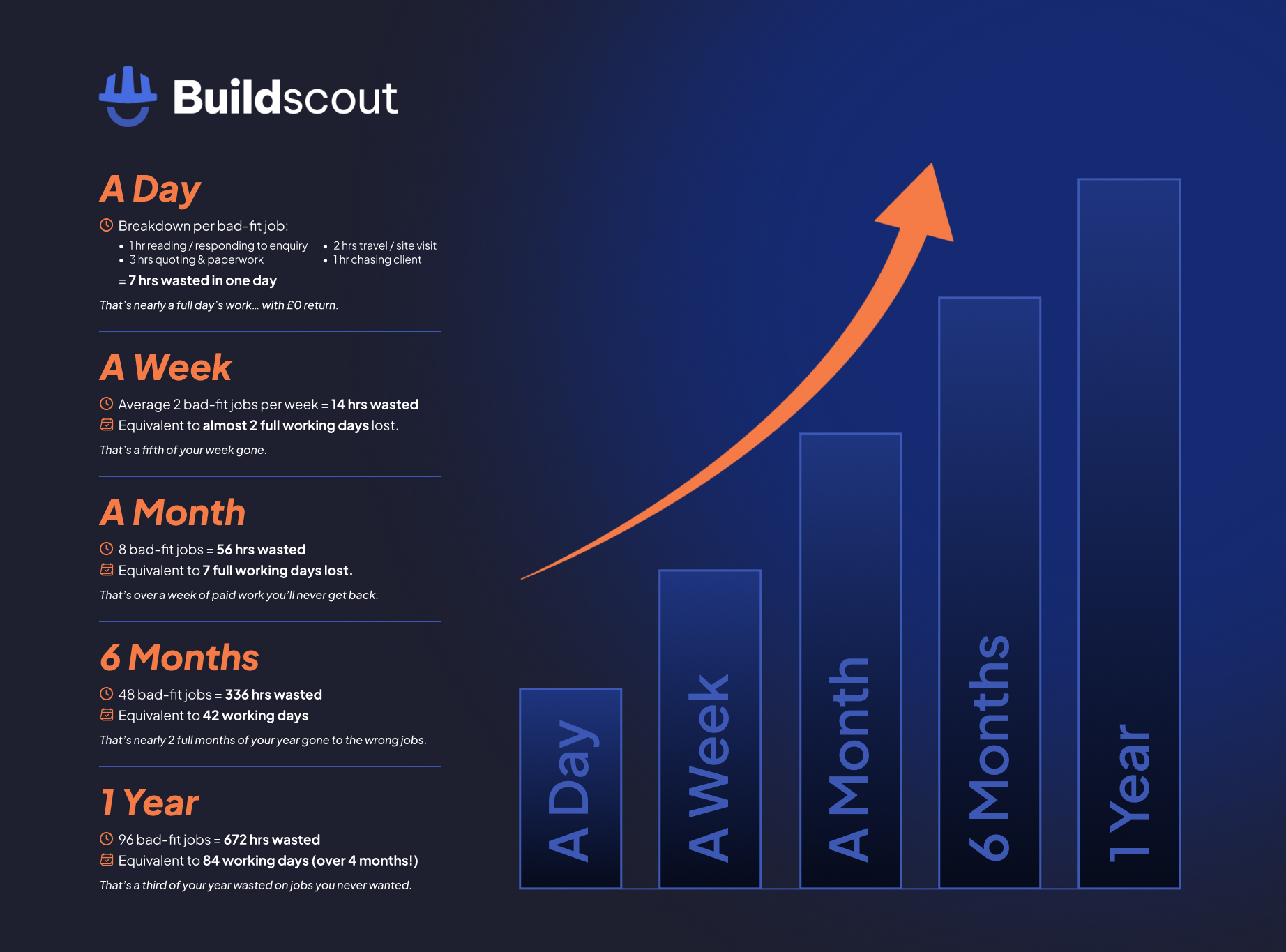
- A day: a single wrong-fit job takes around 7 hours between the enquiry, paperwork, travel and chasing the client.
- A week: at an average of two unsuitable jobs a week, that's 14 hours, nearly two working days.
- A month: 56 hours, or seven working days.
- Six months: 336 hours, or 42 working days.
- A year: around 672 hours, or 84 working days. That's up to four months that could have been spent completing projects, winning better work or taking time off.
And that time has a money value. The calculator above puts a figure on it for your business.
Good Leads vs Bad Leads: How to Tell Them Apart
Cutting wrong-fit jobs starts with spotting them before you quote.
A good lead usually has:
- A clear scope of work
- A realistic budget
- The actual decision-maker on the other end
- A reasonable start date, in weeks or months rather than "sometime next year"
- A willingness to pay for quality work
Red flags to watch for:
- "Just after a rough figure"
- Won't discuss budget, or has unrealistic expectations
- Repeated delays and "we'll get back to you"
- Vague project details
- Several decision-makers who can't agree
- Urgency that disappears once you've quoted
If a client won't discuss money, or their budget is less than half what the job needs, it's usually time to walk away.
Quick wins to improve your leads
- Ask qualifying questions before you quote, including budget and timeline
- Track which sources bring quality enquiries, and focus on those
- Stop chasing leads that show red flags
One good lead is worth ten bad ones. Conversion rates rise, pricing improves because you're not quoting out of desperation, and you end up working with clients who value your expertise and recommend you to others.
Try our wrong fit job calculator
Next Step: Compare Lead Generation Methods
Now that you know the real cost of wrong-fit jobs, the next question is how to reduce them. Not all lead generation methods are created equal — some waste more time than they save, while others deliver better-fit opportunities.
Take a look at our construction lead generation comparison table to see the pros and cons of different approaches, side by side.