
%20CMYK.jpg)



If you're an SME builder wondering what's keeping the phone ringing this year, we can help. We looked at a month's worth of homeowner enquiries generated through Buildscout's direct mail campaign QR code scans, sent by our customers across the UK.
These QR code scans account for around 25% of the total enquiries generated by Buildscout and every time a homeowner scanned the QR code on one of the letters, it told us something about the kind of work our customers are winning enquiries for, and the kind of work and locations that have a huge opportunity to take advantage of. Here's what it told us.
In short:
- 41% were for single-storey rear extensions, the single largest category
- 15% were for two-storey or first-floor rear extensions
- 15% involved standalone outbuildings, garden offices, gyms, or storage buildings, the same proven process applied to a category fewer customers are currently targeting
- 10% were loft conversions
- 10% were conservatory removals or alterations
- 8% were for entirely new dwellings, the same homeowner, the same letter, the same QR code, just fewer customers running campaigns against this application type so far
- Over half of all enquiries came from London and the South East
- The North West, South West, and East of England saw consistent activity despite fewer Buildscout customers currently targeting those regions, proof the process works just as well there
The single-storey rear extension is king
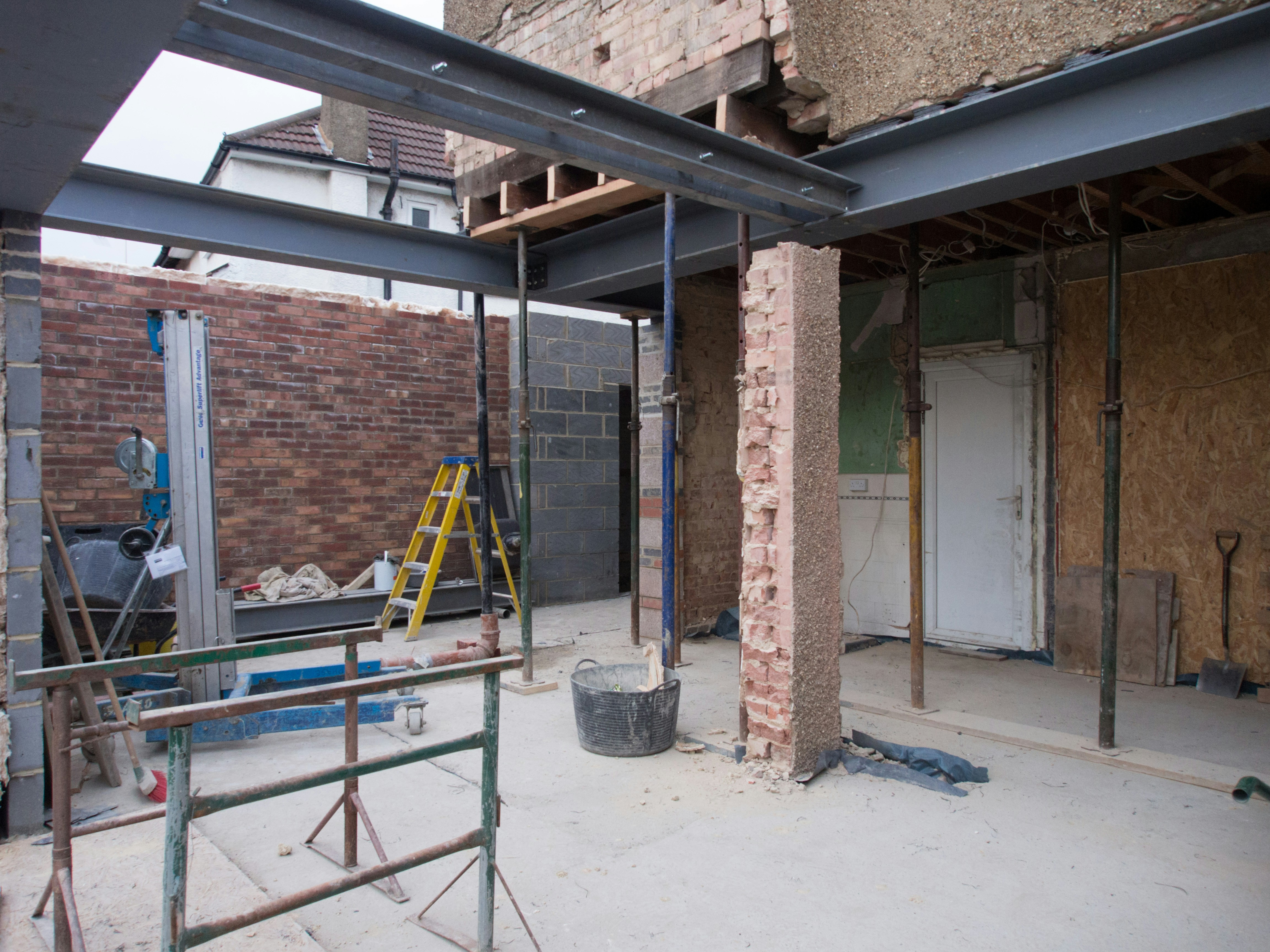
Of the QR code enquiries we tracked, over 40% were for a single-storey rear extension. Not a loft conversion, not a new build, a straightforward extension out the back of a homeowner's house. This isn't surprising once you think about why: it's usually the cheapest way for a homeowner to add meaningful living space, without losing a bedroom upstairs, and without moving house in a market where moving costs (stamp duty, fees, the hassle) make staying put and extending the more attractive option.
For builders, this is the bread-and-butter job that should anchor your pipeline. It's also one of the most common types of householder planning application submitted to councils every month, so this isn't a small pool of projects with everyone fighting over the same handful of homeowners, there's a steady, high-volume stream of new applications to target. If you rely on these type of projects to keep your business ticking over, Buildscout is a great lead gen partner for you. Linx Design & Build are a great example of one of our customers who have secured multiple extension projects through Buildscout. Read their full story here.
Two-storey rear extensions are a meaningful second tier
Around 15% of QR code enquiries were for two-storey (or first-floor) rear extensions, often combined with other works like demolishing a garage or altering the roofline. The homeowner has already secured or submitted planning permission by the time they scan one of our letters, so this isn't about being able to handle planning, it's about being able to build it.
These are bigger jobs with bigger margins, but also more structural complexity: proper foundations, steel beams, building over multiple storeys safely. If your business can comfortably deliver that scale of work, this presents a great opportunity in Buildscout to build trust with homeowners early on in the planning process and win more of this kind of project.
KAS went from winning £300k the previous year to having £4 million sitting in their pipeline using Buildscout to land these kinds of projects, watch what Steven has to say here.
Loft conversions and conservatories are quietly busy
Loft conversions made up roughly 10% of activity, often paired with rear dormers and rooflights. Conservatory removal or alteration showed up in another 10%, frequently as homeowners replace an ageing, leaky 1990s/2000s conservatory with a proper insulated extension. Both of these point to the same underlying trend: people are upgrading what they've got rather than building new. A conservatory swap is a great entry point for a conversation that often turns into a much larger rear extension project once you're in the door.
Outbuildings and garden structures are a growing niche, and an underexploited one
About 15% of enquiries involved standalone outbuildings: garden offices, gyms, storage buildings, and car barns. With more people working from home some or all of the week, the garden office in particular has gone from a novelty to a standard ask.
These are typically smaller-ticket jobs than a full extension, but they're quick to turn around, lower risk, and a good way to build a relationship with a homeowner who might come back for bigger work later.
It's the same homeowner, submitting the same kind of planning application, receiving the same kind of letter, just a different project on the front of it. If you specialise in this sort of project or your competitors are all chasing the same rear extension applications, a campaign specifically targeting outbuilding and garden structure applications could face less competition for attention, using Buildscout’s process that's already proven to convert.
New builds are rare in our data, and that's an opportunity, not a warning sign
Around 8% of June's enquiries were for entirely new dwellings. That's a small share, but it reflects our customer mix, fewer of our customers currently run campaigns against new-build applications, not a weaker process. The mechanism is identical: a homeowner submits a planning application, receives a letter at key stages during the planning process, scans the QR code.
We already know that mechanism works, because it's the same one generating 41% of enquiries on rear extensions. New-build applicants tend to be higher-value, longer-lead-time customers, and because fewer builders are currently running campaigns against this application type, a focused campaign here faces less competition for the same proven process.
Where the demand actually is
Geographically, London and the wider South East and Home Counties accounted for over half of all enquiries we tracked, but that's likely as much a reflection of where most of our customers are based and targeting as it is of underlying demand.
The North West (Greater Manchester and Cheshire), the South West (Devon), and the East of England (Essex, Norfolk, Cambridgeshire) all showed consistent activity despite having far fewer of our customers running campaigns there.
That's the same proven process, the same target market, just fewer customers running it through Buildscout in those regions so far. If you're a builder outside the South East, that's worth sitting with: this process would generate enquiries and win more good fit work for you, simply with less competition chasing the same letterbox.
Proven wins and the untapped opportunity
These numbers are solid proof that Buildscout works. Builders are winning real, qualified, good-fit enquiries off the back of planning application letters, and single-storey rear extensions alone account for a huge volume of that activity.
There's plenty of opportunity sitting right in the proven categories and proven areas: rear extensions, two-storey conversions, loft conversions, and the South East, where the playbook is already working and the demand is well established and consistent.
And because rear extensions and similar projects are also the most commonly submitted type of planning application in the UK, there's no shortage of fresh applications coming through every day, this isn't a handful of builders competing over the same few projects, it's a deep, constantly refreshing pool of homeowners to reach.
There's just as much confidence to be had in the categories that haven't been fully tapped yet: new builds, garden outbuildings, and regions like the North West, South West, and East of England. It's not a different process or a different audience, it's the exact same process, applied to homeowners who haven't had as many of our customers' letters land on their doormat yet. Less competition, the same proven approach once a builder goes looking for it.
Either way, the opportunity is there. And remember, this is only what we can see through QR scans, with roughly three more homeowners responding by phone, website, or social media for every one that scans, the real opportunity is bigger again than these numbers alone suggest.
See What Leads and Enquiries Buildscout Can Drive for Your Business
The numbers speak for themselves. Rear extensions, loft conversions, outbuildings, there's steady work out there, and some of it with a lot less competition than you'd think. Want to see which of these opportunities fit your business? Schedule a demo with the team and we'll walk you through it.


.webp)
%401x.webp)





.png)